'To bring about a paradigm shift in farmers's income, we need to change our approach to agriculture, and transit from the narrow prism of cultivation to a full-fledged enterprise, by building all associated supply chain linkages.' 'This alone will make the farmer an entrepreneur in his own right.'
Fifty-six months on, the government's record in implementing these schemes and projects has been mixed, report Arup Roychoudhury and Indivjal Dhasmana.

The area-based income compensation scheme says that farmers should be paid the difference between the actual price they get and the state-mandated MSP. The compensation will be determined on a per acre basis by using district-level estimates of marketable surplus and prices in the harvest season.

However, economic growth in five years of the UPA and NDA cannot be compared because of the now complex back series data, reports Indivjal Dhasmana.

After the 2019 election, one thing is sure: GST will see a number of changes, explains Indivjal Dhasmana.
However, independent economists are not as gung-ho as the finance ministry over the likelihood of deficit target being met this time around, says Indivjal Dhasmana.
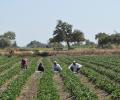
While the farmers are not getting remunerative prices for their produce, at the same time they are forced to pay high prices for items they consume.
Slight recovery in growth is expected only in July-September.

The Centre has projected reining in its fiscal deficit at 3.3 per cent of GDP in FY19.
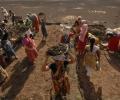
Many farmers in drought hit states are seeking MGNREGA work but the state government's coffers do not have enough fund to pay the salaries of these workers.

Cheap milk prices, rising fodder cost and the difficulties in buying new cattle and selling old ones on account of cow vigilantism have cast a triple shadow on this sunshine sector in Indian agriculture, reports Sanjeeb Mukherjee.
The new governments will have to spend much more than Rs 220 billion in Rajasthan, more than Rs 160 billion in MP, and nearly Rs 30 billion in Chhattisgarh.
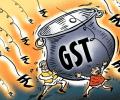
Industry had sought this 3-month extension, specifically for players struggling to collate the information that are required to be disclosed in the GST forms.

Aiming to push India into the list of the top 10 agri export nations, the policy has been backed by the Prime Minister's Office

The latest official numbers on the price of agricultural produce gives an idea of what's fueling the farmers' protest in Delhi.
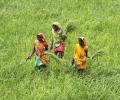
For the entire UPA regime, from 2005-06 to 2013-14, the average annual farm growth according to the GDP back series data is 3.8 per cent, which too is higher than the first four years of the NDA, though these two periods aren't comparable because one spans nine years and the other four.
Dalit votes could play a decisive role in 28-30 constituencies in the 230-member assembly.

He did not believe in any fiscal puritanism. In 2012, when it was almost certain that the government will breach the 2012-13 fiscal deficit target, he wrote that in abnormal times, abnormal measures are required to get back to normalcy.

The services sector, which plays the biggest role in shaping the economy, is facing loads of issues currently. The largest segments, financial and real estate, are struggling to cope with bad debts and low demand for houses.

The railways, the country's largest employer, will be hiring 127,000 people in 2018-2019, for which 23.7 million are competing.
